3D Design
Allgäu Industries
Innovative presentation for an innovative industry product
Allgäu Industries
3D designer for interactive product visualization
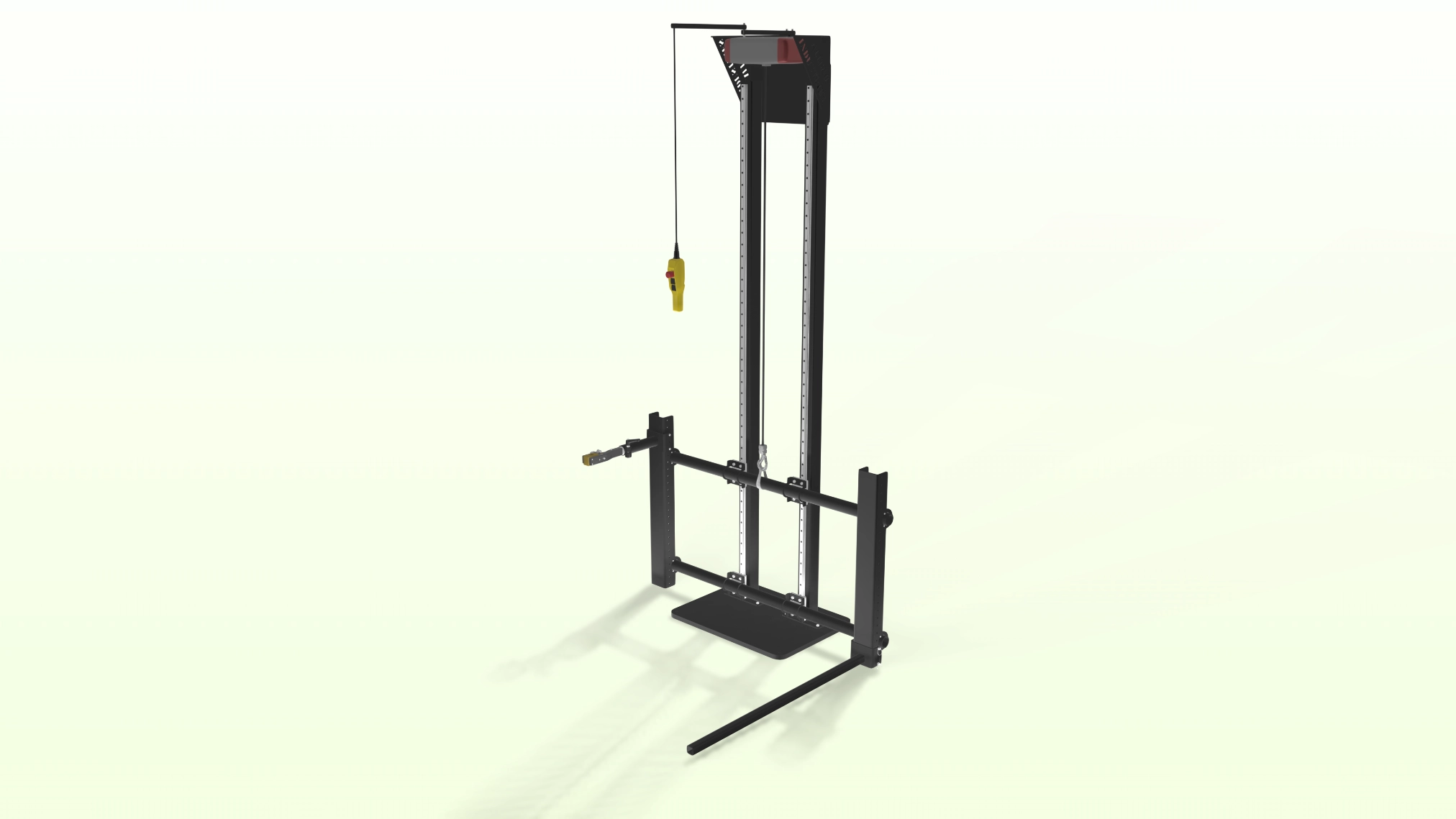
Allgäu Industries offers professional bike lifts for bike repair shops. One of them is a unique innovation that can lift all kinds of cargo bikes.
Their website was still new but lacked any images or videos to present their products.
Just from looking at their website, it was not clear what their product actually was or which advantages it offered bike repair shops.
But while the website is not Allgäu Industries' main channel for lead generation, their main sales channel is showcasing the lift directly in bike shops.
That caused huge logistical challenges, since the lift had to be transported throughout the DACH region. Because the lift is built for heavy loads, it is large and heavy and can only be transported disassembled in a van. All of that effort was required without knowing how likely it was to sell one.
After clarifying business needs and sales strategies, I came up with a plan: a digital twin, allowing interested shops to explore the lift on their own and learn how it works.
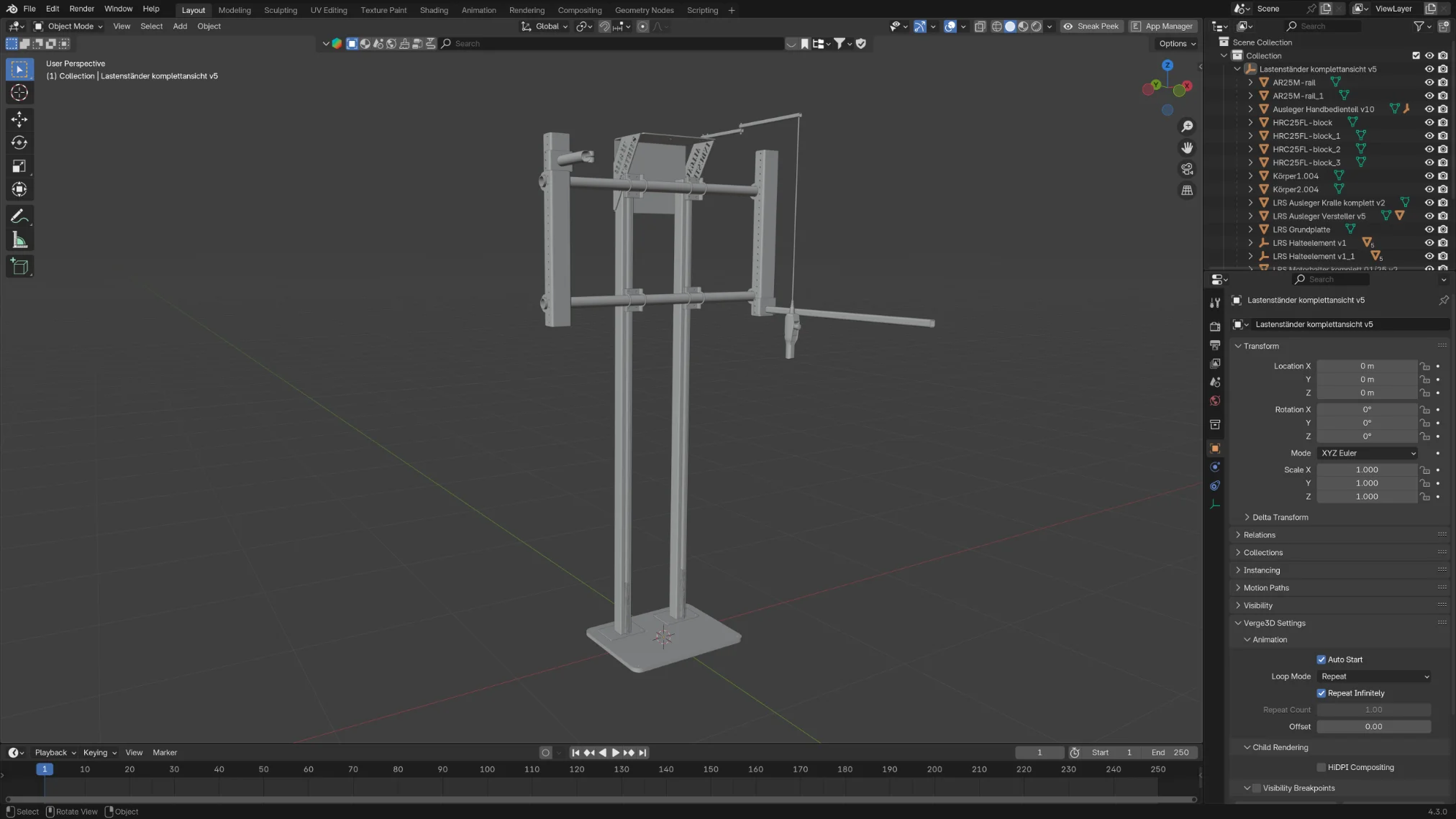
Allgäu Industries could provide me with some basic 3D files of the lift. I had to model the wrench and all of the fasteners in order to make the assembly realistic.
I also found a royalty-free model of a cargo bike, a crucial element of providing real-life context on how the lift actually works.
While developing the vision of the digital twin, I kept Patrick, the owner of Allgäu Industries, up to date on the process and next steps.
After setting everything up, I added realistic materials, set up lights and cameras, and worked on the animations and interactions to bring the model to life, and optimized the mesh and texture images for web/AR use.
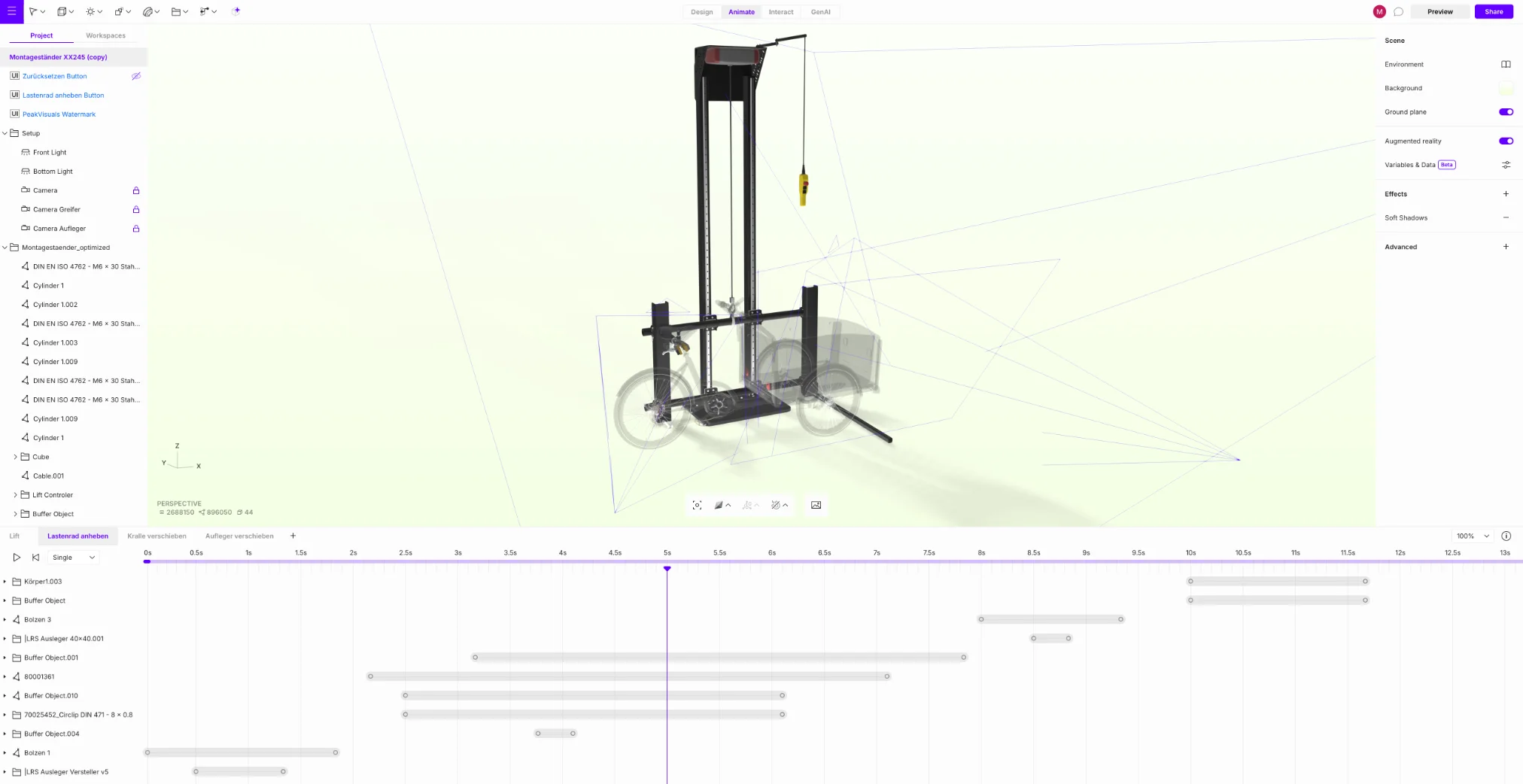
Fonts and colors match Allgäu Industries' website to keep everything consistent. The interface is kept minimalistic, with no descriptive text besides the button labels. This is intentional to keep the attention on the visuals and to encourage learning by exploring, not by reading.
The last steps were to make everything responsive to provide an excellent experience on any device, create an augmented reality (AR) file, and test that everything worked as expected on different devices and screen sizes.
The 3D visualization simplified Allgäu Industries' sales process a lot. Disassembling the lift, loading it onto the van, driving to a potential client, unloading and assembling so that they can present, then disassembling again, and so on. That was kind of what the original process looked like. It cost a lot of time and energy, and therefore money.
The digital twin now allows different approaches: Once a lead is interested, Allgäu Industries can send over the link and the prospect can explore it themselves. The gamification aspect lets them spend more time with the product, making it more likely that they fully understand it and become more interested in owning one.
Alternatively, Allgäu Industries can simply drive to a prospect without bringing the lift along to the first meeting. Instead, they carry it in their pocket and can show it to prospects in 3D.
In any case, the real game-changer is the AR functionality. With the tap of a button, the lift is projected into the real world in real-life dimensions. That allows prospects to experience the lift in their own shop, at the place where it might stand in the future. It also helps them estimate the space needed for the lift without having to measure or move things around.
To summarize, the digital twin significantly simplified the sales process, saving both time and money.
This is only the first step in digitizing the product. There are several stages of expansion possible, depending on the client's needs and business goals. For example, future steps could include showcasing the product highlights and specifications in 3D or creating a step-by-step digital assembly guide for the shops.
