3D Design

Allgäu Industries

A virtual sales assistant for a heavy-duty bike lift

Allgäu Industries manufactures a heavy-duty bike lift for professional bike workshops. Their website was still quite new but lacked meaningful images or videos to explain the product and its benefits.

To generate leads, the founder often transported a disassembled lift across the DACH region to showcase it in person. The product is large and heavy by design – great for lifting bikes, not so great for logistics.

The question was:
How can we make the product understandable and tangible without moving hundreds of kilos for every first meeting?
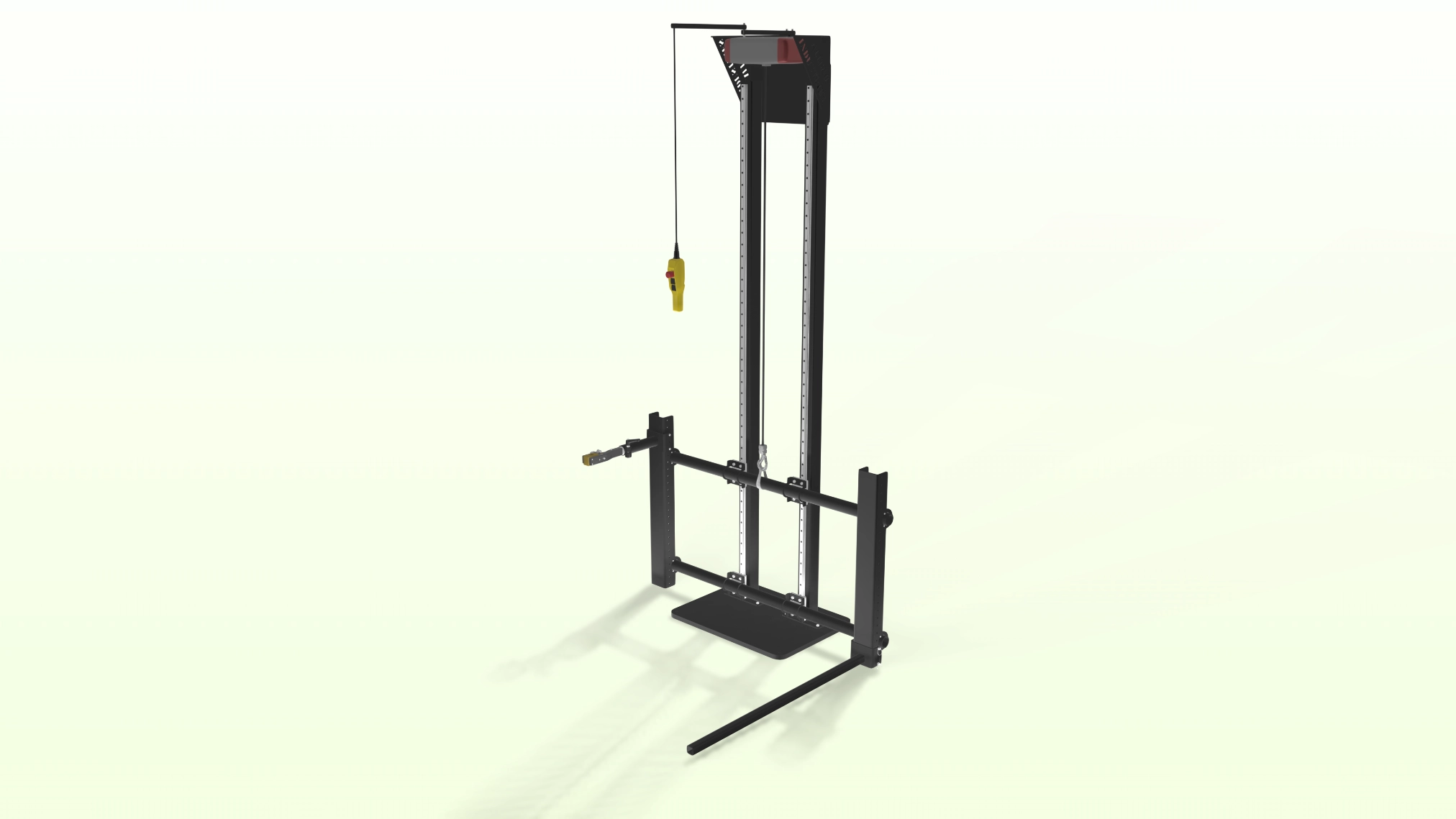
3D model of cargo bike lift
Client

Allgäu Industries

My role

I worked directly with the founder of Allgäu Industries to design a digital twin of their bike lift and turn it into an interactive 3D and AR sales experience.

Responsibilities
  • Analyzed the existing sales process and logistical pain points
  • Defined the role of a digital twin within the sales funnel (trade fairs, on-site demos, remote meetings)
  • Modeled and prepared the product in 3D based on CAD data
  • Designed the interactive 3D experience, including animations, hotspots, and UI
  • Created an AR version to let potential customers place the lift in their workshop at true scale
Tools
Blender
Vectary
InstaLOD Studio
Technologies & Methodologies
3D modeling
Texturing & lighting
Animation
Visualization
WebAR

Challenge

Just by looking at the website, it was not clear what the product actually was or why it mattered to bike repair shops. At the same time, the main sales approach – transporting the physical lift – created serious friction:

  • High time and transport effort for each demo
  • Risk of damage during transport and assembly
  • No guarantee of a sale after all that effort

We needed a solution that:

  • Explained the product visually and interactively
  • Could be used in trade fairs, sales meetings, and remote calls
  • Reduced logistical effort, without losing the “wow” effect of seeing the lift in action

Design process

Understanding the sales context

Before touching any 3D tools, I first clarified how the lift was being sold:

  • Who is in the room during a typical sales conversation?
  • Which questions come up again and again?
  • At what moment does a prospect decide “yes” or “no”?

From this, we defined the key roles of the digital twin:

  • Show how the lift works and what it can do
  • Let prospects explore details at their own pace
  • Enable remote demos where the physical lift is not available

From CAD to digital twin

Allgäu Industries provided CAD data of the lift. Using this as a base, I:

  • Cleaned and adapted the geometry for realtime rendering
  • Modeled missing parts such as the wrench and fasteners to make the assembly realistic
  • Added realistic materials and lighting that matched the physical product

The goal was not visual perfection for marketing shots, but a convincing, technically credible representation that works well on typical devices.
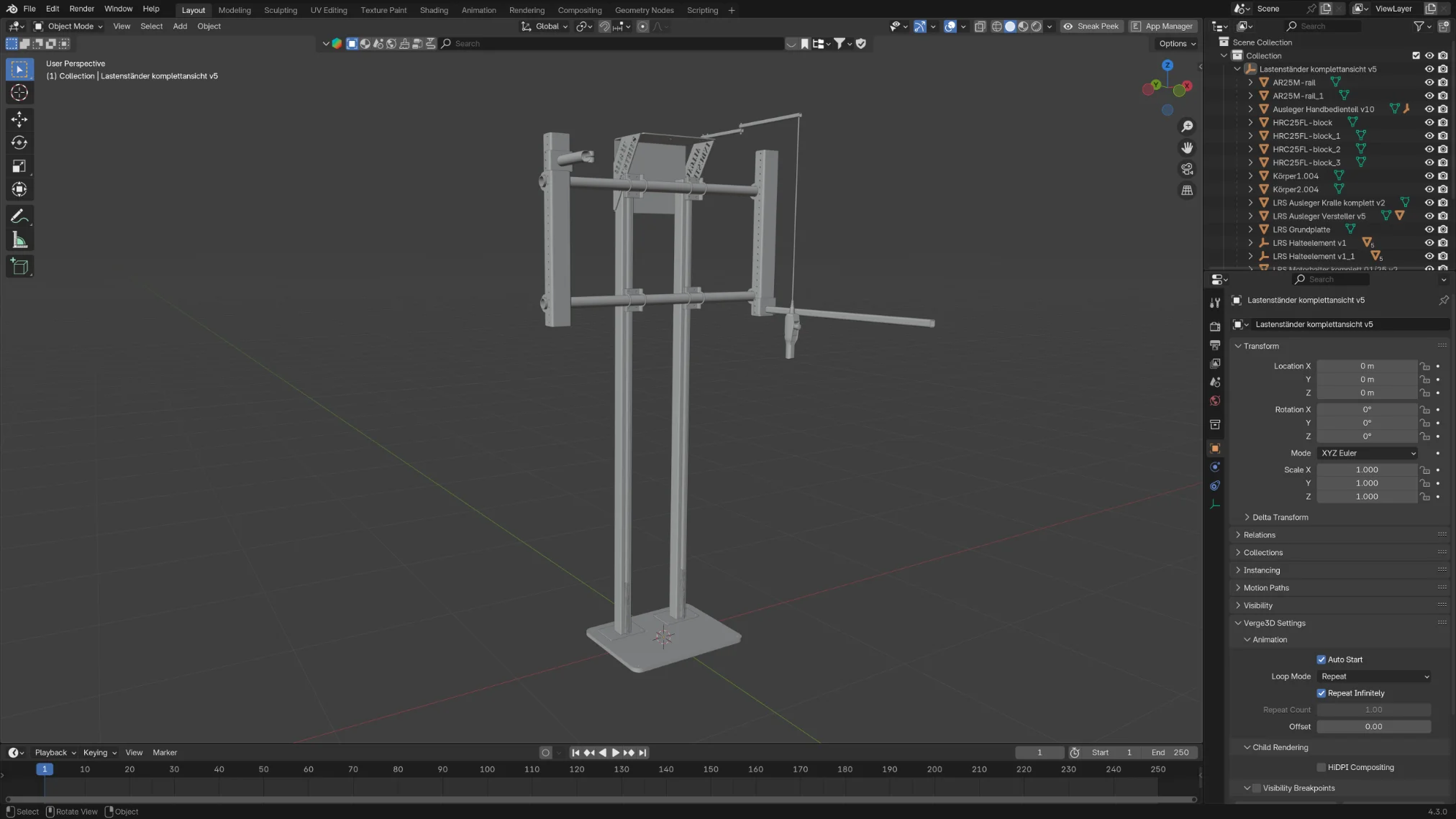
CAD file of the bike lift
CAD data as the basis for the 3D visualization

Designing the interactive experience

Next, I turned the 3D model into an interactive product experience:

  • Defined camera angles that best explain the mechanics and stability
  • Added a cargo bike to show how the lift would work in a real use case
  • Added animations and interactions to highlight key features and functionality
  • Designed a minimal one-button-interface that keeps the focus on the 3D model rather than on UI elements

Fonts and colors were aligned with the existing Allgäu Industries brand so the experience felt like part of their ecosystem, not a separate tool.

The result: prospects can rotate, zoom, and see the lift in motion, learning by exploring instead of reading long technical descriptions.
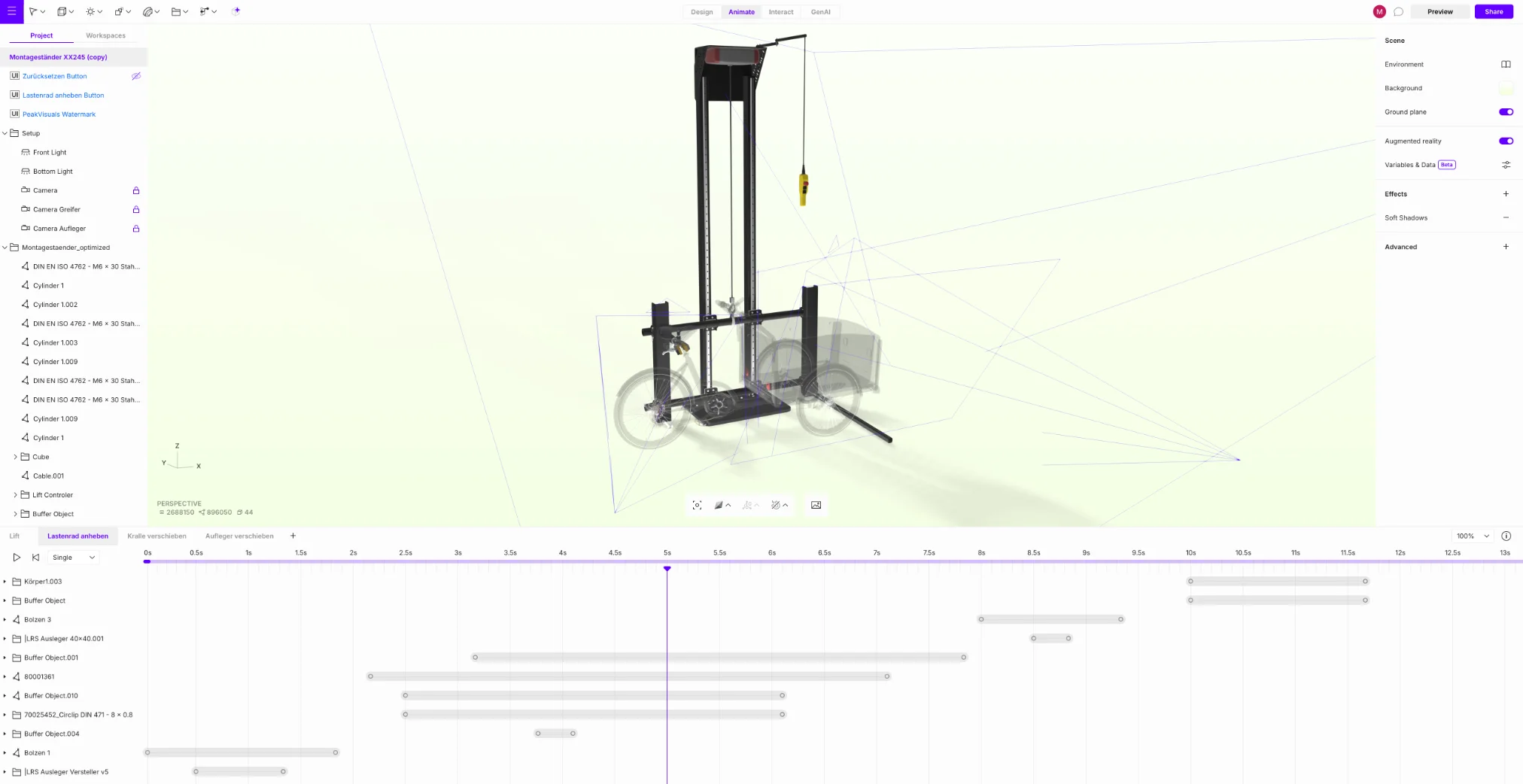
Vectary Lift Screenshot
Setup in Vectary with textures, light, cameras, buttons, and animations

AR and responsiveness

To make the experience even more tangible, I created an AR version of the lift:

  • With the tap of a button, the lift is projected into the real world at true scale
  • Prospects can place it in their workshop to see how much space it would take
  • They can walk around it and explore details from any angle

I also optimized the experience for different device sizes so it works well on desktop, tablet, and mobile. This way, the sales team can use it wherever they are – in person, on a video call, or at a trade fair.

Video of the bike lift in AR

Outcome and learnings

Impact

  • Allgäu Industries can now showcase the product without always transporting the physical lift, especially in early meetings
  • Prospects understand the product faster and more deeply, thanks to interactive 3D and AR instead of static images
  • The digital twin serves as a virtual sales assistant in remote demos and at trade fairs
  • The AR functionality helps prospects estimate the required space without measuring or moving equipment around
  • The project laid the foundation for further digitizing the product, such as 3D-based feature highlights or step-by-step digital assembly guides

What I learned as a designer

  • Interactive 3D and AR work best when they focus on a few key use cases, instead of trying to replicate every detail of the real world
  • Designing for sales teams means balancing visual fidelity, performance, and ease of use – if it’s too heavy or too complex, it won’t be used in real-life sales meetings
  • For complex physical products, a good digital twin can shift the sales conversation from “logistics and setup” to “value and fit”

See for yourself

< Back to home